our history
The land
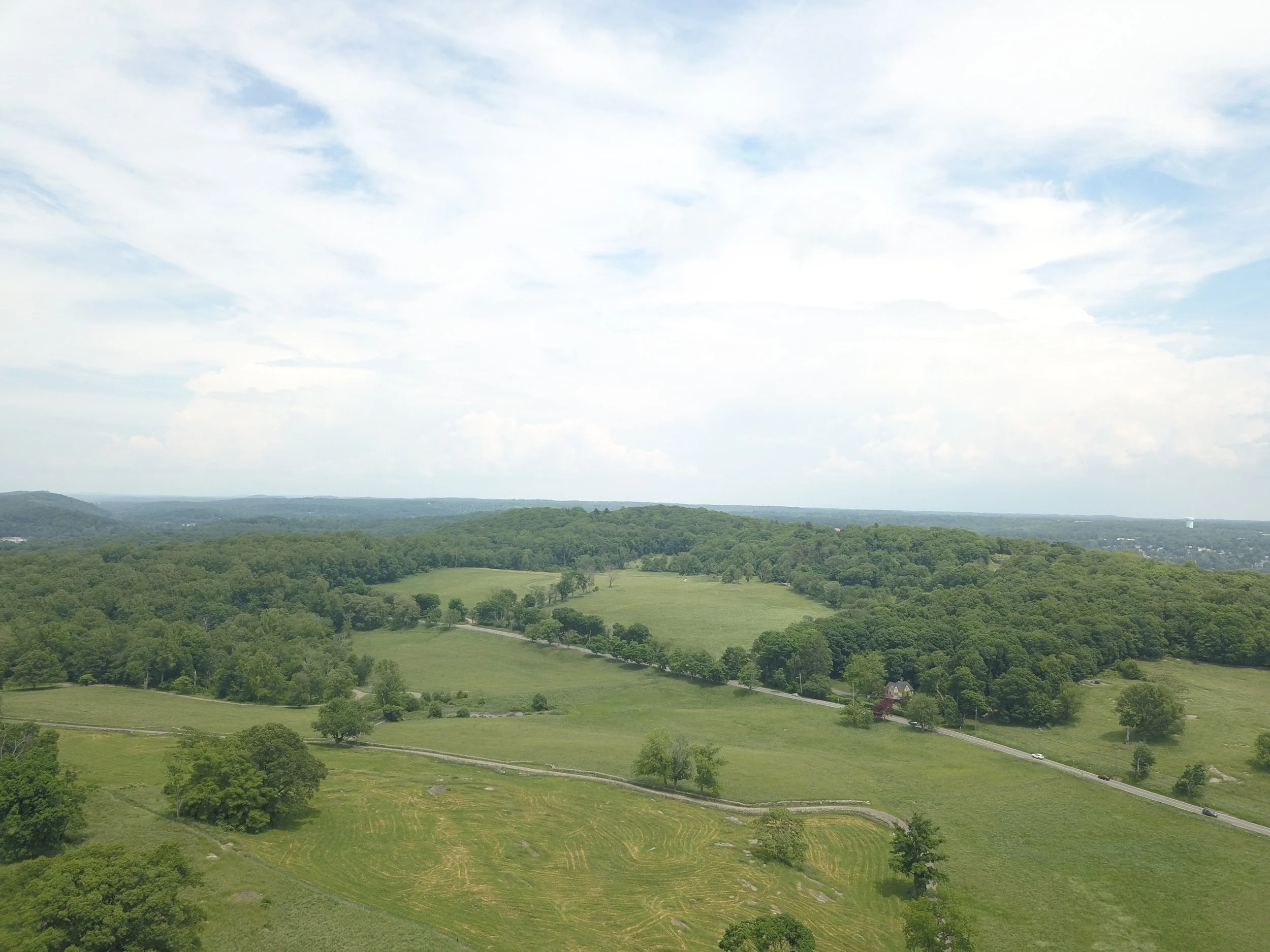
Stone Barns Center recognizes the exclusions and erasures of Indigenous peoples from food and farming, including on this very land. We are located on the unceded lands of the Munsee Lenape, Schaghticoke, and Wappinger peoples. In 2004, eighty acres of the Rockefeller State Park Preserve (est. 1983) was donated to Stone Barns with the goal of creating a regional hub where visitors could participate in an ecological food system. We honor the native people who cared for this land for 11,000 years. As stewards of the land, we seek to highlight its continuous agricultural history that began with their work.
the barns
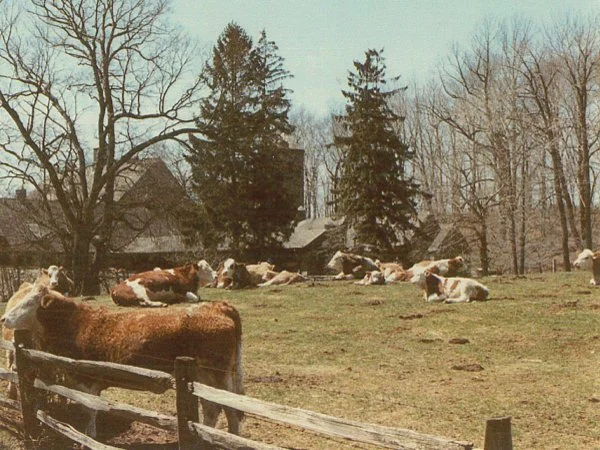
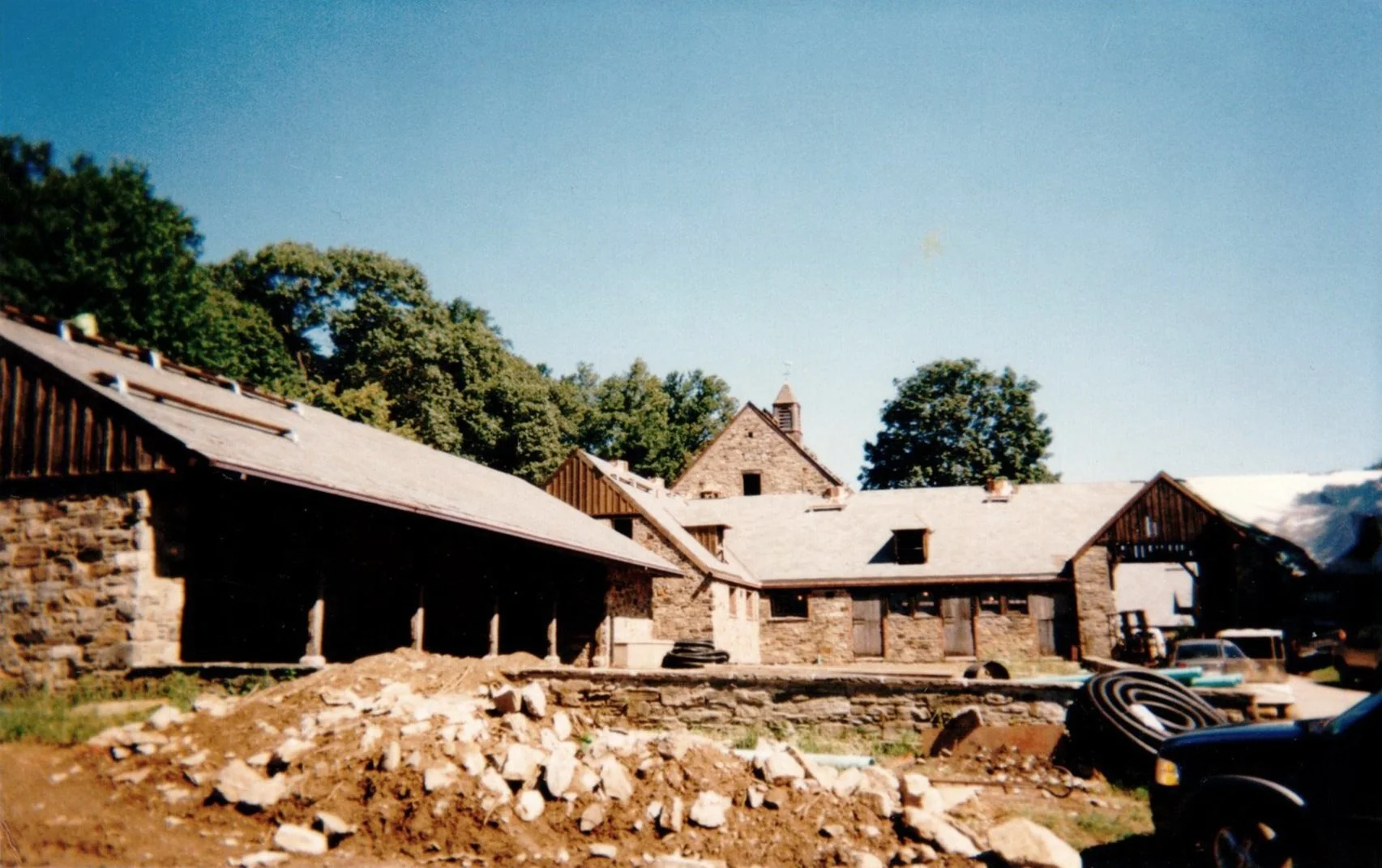
Our iconic fieldstone barns were designed and built as a family dairy operation in the 1930s under the direction of John D. Rockefeller, Jr., whose family purchased hundreds of acres in the lower Hudson Valley. He commissioned Grosvenor Atterbury, an architect, town-planner, and inventor, to design a group of buildings in the Normandy style of northern France. The buildings were constructed between 1931 and 1933 and operated as a private dairy farm for twenty years. David Rockefeller, the youngest son of John D. Rockefeller, Jr., later inherited the buildings and surrounding property.
1996–stone barns restoration
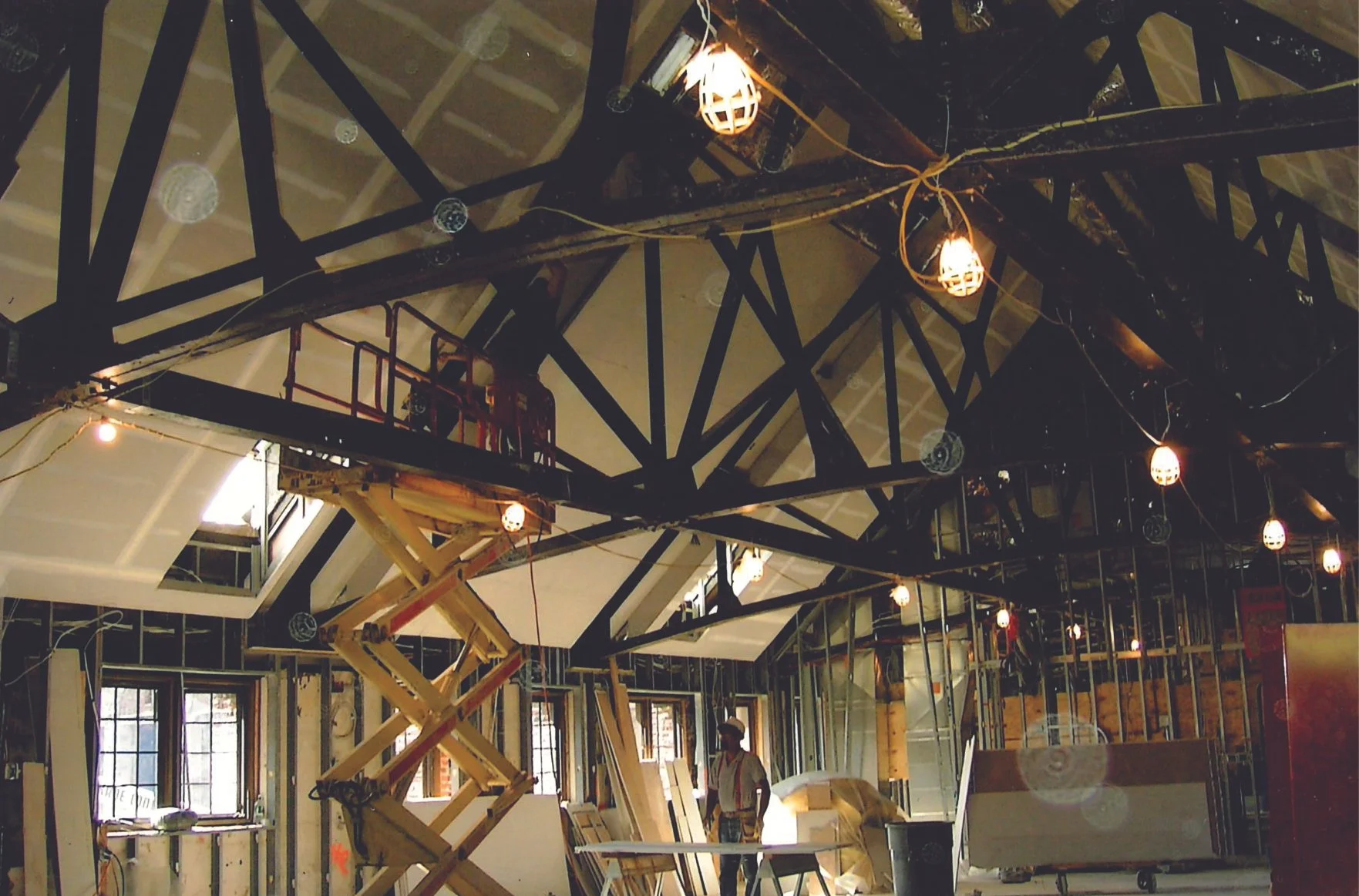
After the passing of Peggy Rockefeller, David Rockefeller and his daughter Peggy Dulany led a renovation of the buildings. Mrs. Rockefeller hoped that the farm buildings in Pocantico Hills could be returned to their original use, paving the way for Stone Barns founding.
2004–Founding of stone barns
Stone Barns and our restaurant partner Blue Hill were founded on May 4th, 2004 by David Rockefeller and Peggy Dulany in memory of his late wife, Peggy Rockefeller. Mrs. Rockefeller was an agricultural conservationist and co-founded the American Farmland Trust, a non-profit organization that seeks to foster environmentally healthy farming practices and pioneered the use of conservation easements to protect agricultural lands from development.
David and Peggy worked with conservationists and organic farmers to lay the groundwork for the nonprofit. Their goal was to establish a working four-season farm and hub for learning, creativity, and experimentation. They envisioned a center where visitors could connect with the rich agricultural history of the property and of the lower Hudson Valley region.
In partnership with siblings Dan, David, and Laureen Barber, they established a restaurant on site to advance our mission of catalyzing an ecological food culture, naming it Blue Hill at Stone Barns.
Pre-1623 – Lenape Tribes
Colonists from the Dutch West India Company began to settle in the region in the early 1600s and had forcibly taken over what they called New Amsterdam by the mid-17th century. Finding enough labor to cultivate the land was challenging for wealthy merchants, creating a strong financial incentive to capture Africans, ship them on the harrowing voyage of the Middle Passage, and sell them into enslavement for forced labor throughout the 13 colonies, including the land that later comprises Westchester County.
European settlers, indentured servants, enslaved people, and free workers cultivated grain, fruits and garden produce, including some from Europe and some that were native to the Americas. Horses, cattle, hogs and sheep were introduced by the early 17th century. In 1664 British colonists gained control of the Province of New York, including Westchester County, until the Revolutionary War. Wheat and potatoes became important crops in the lower Hudson Valley by the 18th century. The wheat was milled into flour and sold in New York City and to the growing sugar plantations in the Caribbean, sustaining the circular nature of the global slavery economy. By the time New York begins gradual emancipation in 1799, the state has the largest enslaved population in the North, with many people remaining enslaved for decades after slavery is abolished in New York in 1827. Over the 19th century, dairy became a prominent form of agriculture in the region.
1623 – European Colonization
The history of Indigenous peoples in this area goes back 11,000 years. The hills on the eastern side of the Hudson River were important hunting grounds for Lenape tribes who lived in this region. Main food sources included deer, bear, beaver, otters, turkey, waterfowl, fish and shellfish from the Hudson River. Forage products included berries and other wild plants.
In addition to suffering the ravages of disease and warfare, many Indigenous tribal members were killed or forcibly removed by the European settler-colonists and the federal government by the beginning of the 1800s. Today, prominent Lenape communities reside in Oklahoma, Kansas, Missouri, Wisconsin, Ontario and New Jersey. “Pocantico” is an Algonquin/Lenape-derived word which is used to describe the Pocantico River, a tributary of the Hudson River.
Citations/Resources
Official Website of the Nanticoke Lenni-Lenape Nation, “Our History.”
West Philadelphia Collaborative History, “The Original People and Their Land: The Lenape, Pre-History to the 18th Century.”
Robert Bolton, “A History of the County of Westchester, from Its First Settlement to the Present Time,” Vol.1, (1848).
Historic Hudson Valley, “People Not Property.”